Sunday, 22 September 2013

More iPhone Pics

Chicory, Cichorium intybus, in Jubilee Country Park.  21 July 2013.
Chicory, Cichorium intybus, in Jubilee Country Park.  21 July 2013.
Here are a few more iPhone pics taken during the year.  There's a bit more of nature in this set.

The first one is a bank of chicory in Jubilee Country Park.  The park has this flower as its emblem.  I took this shot to show the white-flowered plant in the foreground.  It seems to be a natural variety. 

The salad chicory plant is a different subspecies, but you can certainly eat these flowers, if you are prepared to chance the possibility that they have dog urine on them.  It's a popular park!

Hayes Common, 20 June 2013.
Someone had left this lighted candle on the barrier.  Probably it had been there since the night before.  It's vanilla and hazlenut scented, which sounds quite tasty.

Railway bridge on Tiepigs Lane, Hayes.  20 June 2013.
Railway bridge on Tiepigs Lane, Hayes.  20 June 2013.
I took this because it seemed to be in a state of disrepair - and it's a well-used bridge, with 8 or more trains an hour, and it's my route into London, so I did wonder how long it would be left to deteriorate.  But it has since been repaired. 

The sign on the left identifies the bridge and gives a phone number.  So if it falls down, we will know who to call, if we can get the sign out from under the rubble.

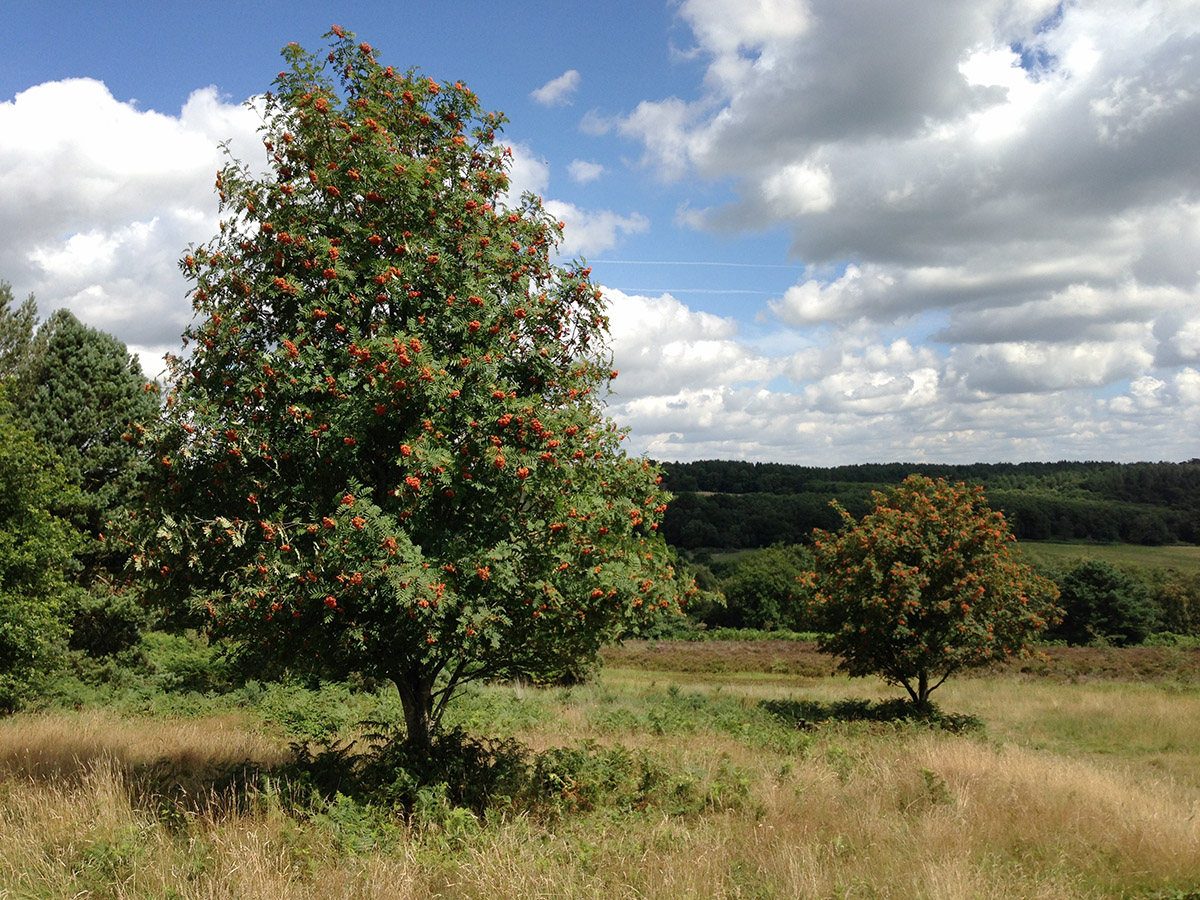
Rowan trees on Ashdown Forest.  6 August 2013.
Rowan trees on Ashdown Forest.  6 August 2013.
Two beautiful Rowan trees on Ashdown Forest.  Rowans put on a lovely show in the second half of the summer.

Wednesday, 18 September 2013

An iPhone in London

Covent Garden, 9 August 2013.
These days, often the only camera I have with me is my iPhone.  It's all completely automatic, but it takes quite a good quality photo and is always there.  So here are a few shots taken in London this year; nothing special, just things I wanted to capture. There is only a little nature involved.  There will be more of that next time.

This sandy arena (arena seems the right word for such a thing!) had been set up at Covent Garden for some sort of marketing publicity.  It looked rather like a giant hovercraft except for the ball players inside.

Queue for the V&A on 30 May 2013
I went with my sister to see the David Bowie exhibition at the V&A.  But these queues are quite usual even without a popular exhibition.  The whole place is popular.

Diana's Diner, Endell Street, 9 August 2013.
Probably the last chance to take a photo of this shop front.  It's sad when small places like this close down, specially in the heart of London.  Though, it might just be a refurbishment.

Harris Hawk in Trafalgar Square, 23 July 2013.
And here's some nature .. but well tamed.  This is a Harris Hawk, used to control the pigeons in Trafalgar Square.  Not to hunt and kill them, but to scare them off.  It works well, too, combined with the banning of stalls selling bird food.  There used to be drifts of pigeons everywhere, and everything was covered with bird droppings.  Now there are hardly any, and the whole place looks better for it.  You can see a couple in the background.

I was surprised to find this bird apparently unattended.  I have seen their handlers before, in quiet side streets with their birds on their arms, but never birds alone like this.  And look how normal the people seem to think it is to have a large, sharp-beaked raptor perched nearby! 

Sunday, 1 September 2013

High Elms Trees, part 2

Giant Redwood, Sequoiadendron giganteum. High Elms Country Park, 5 August 2013.
Also known as Wellingtonia.  Of course, this is just a baby compared to specimens in America.  It's the biggest species of living tree by volume.  But even so, it looks impressive.

I tried several different ways of capturing this tree, but in the end there was no way to get a good view of the whole thing without some branches from neighbouring trees getting in the way.  If I went closer, the tree was far too foreshortened, even using a specialised lens.  (I'll mention the camera equipment at the end of this series.)

Foliage and bark of Giant Redwood.  High Elms Country Park, 5 August 2013.
The leaves are tiny compared to the needles of the pines and cedars elsewhere in this set.  The bark is pretty special; it is spongy and light, and when I was in the Boy Scouts they were introduced to me as "punch trees" because you can give them a hard punch without damaging your hand.  This light, spongy bark insulates the trunks during forest fires - and, apparently, they need these fires to clear out competing trees if seedlings are to grow successfully. 

Coastal Redwood, Sequoia sempervirens.  High Elms Country Park, 5 August 2013
Coastal Redwood, Sequoia sempervirens.  High Elms Country Park, 5 August 2013
This is even more of a baby, despite already being quite tall.  They can grow up to 379 feet, says Wikipedia.  

Foliage of Coastal Redwood, Sequoia sempervirens.  High Elms Country Park, 5 August 2013
Foliage of Coastal Redwood, Sequoia sempervirens.  High Elms Country Park, 5 August 2013
The foliage and bark are quite different.

Corsican Pine, Pinus nigra, and Scots Pine, pinus sylvestris.
High Elms Country Park, 23 August 2013.
I'm not sure which subspecies of Pinus nigra this Corsican pine actually is.  It's a Mediterranean tree. The Scots Pine behind and to the left is native to the UK, but not to this part of it.  But lots of Scots Pines have been planted locally.  They seem to have been used as a landscaping feature and you can often find them at the tops of hills or on ridges. 

Top of a Scots Pine.  High Elms Country Park, 5 August 2013
Top of a Scots Pine.  High Elms Country Park, 5 August 2013

One way to distinguish a  Scots Pine from other pines is to look for a reddish cast to the bark at the top of the tree.   It's clearly visible here.

More in part three ...


Thursday, 29 August 2013

High Elms Trees, part 1

Driveway at High Elms Country Park, 5 August 2013.
I recently took some photos that are intended for a forthcoming leaflet for a tree trail at High Elms Country Park.   The trees in question are mostly not native, but there are some excellent specimens around and near to the old driveway to what used to be the Holwood estate.  This top photo was a possible cover shot.

I took most of these early in the morning before the sun hit the trees.  That gave even illumination, but the sky is not very lively.  Sunshine and blue skies would be ideal, but very few of these trees are ever evenly lit by the sunshine and the patchy illumination gives a very poor result.

So, I will show some of the trees over a few posts.  I tried a few sunny shots a few days later and I will use those where possible.

Turkey Oak, Quercus cerris.   High Elms Country Park, 23 August 2013.
 Turkey Oak, Quercus cerris.   High Elms Country Park, 23 August 2013.
This is a European oak, and is the favoured home of the Oak Processionary Moth, so it needs watching.  A great specimen!  Here are the leaves and an acorn.

Turkey Oak leaves.   High Elms Country Park, 8 August 2013.
 Turkey Oak leaves.   High Elms Country Park, 8 August 2013.
A developing acorn on Turkey Oak.   High Elms Country Park, 8 August 2013.
A developing acorn on Turkey Oak.   High Elms Country Park, 8 August 2013.
One problem with this photo set is that I could not get ideal illustrative shots of the specimens because they are at a specific stage of development; so, no young leaf buds, and in this case, no mature acorns.  And this oak has a lot of black fungus on its leaves. 

Cedar of Lebanon, Cedrus libani.  High Elms Country Park, 5 August 2013.
Cedar of Lebanon, Cedrus libani.  High Elms Country Park, 5 August 2013.
A tree that has many connections for historians and classicists.  This Mediterranean tree was used by the Phoenicians to build the ships in which they traded around the known world.  It was an important resource.  The Egyptians used the resin for mummification; and today it is the centrepiece of the Lebanese flag.

Cedar of Lebanon, Cedrus libani.  Foliage.  High Elms Country Park, 5 August 2013.
Cedar of Lebanon, Cedrus libani.  Foliage.  High Elms Country Park, 5 August 2013.
I couldn't find any cones to photograph on this tree.

Blue Atlas Cedar, Cedrus atlantica glauca.  High Elms Country Park, 5 August 2013.
Blue Atlas Cedar, Cedrus atlantica glauca.  High Elms Country Park, 5 August 2013.
This tree is sometimes considered to be a subspecies of the Lebanon Cedar.  It is similar in overall habit.  As you can see, this form has a conspicuous glaucous cast to the foliage.  And I found plenty of cones.

Foliage and a young cone of Blue Atlas Cedar.   High Elms Country Park, 5 August 2013
Foliage and a young cone of Blue Atlas Cedar.   High Elms Country Park, 5 August 2013
More next time ...

Saturday, 17 August 2013

More Shoreham

Hoverfly, Episyrphus balteatus.  Shoreham, on 3 August 2013.
Hoverfly, Episyrphus balteatus.  Shoreham, on 3 August 2013.
At Shoreham we saw some of my favourite hoverfly.  It's probably our commonest species, and you can see it all through the summer.   It makes a really good photo against the yellow flowers it seems to favour.

I also caught a good shot of another hoverfly:

Hoverfly, Scaeva pyrastri.  Shoreham, 3 August 2013.
Hoverfly, Scaeva pyrastri.  Shoreham, 3 August 2013.
Pity it was on a tatty flower!  And there were quite a few grasshoppers and crickets chirping away in the grass.  This one is a Speckled Bush-cricket.

Speckled Bush-cricket, Leptophyes punctatissima.  Female.  Shoreham, 3 August 2013.
Speckled Bush-cricket, Leptophyes punctatissima.  Female.  Shoreham, 3 August 2013.
It's a female, and that sickle-shaped projection at the back is its ovipositor.  The eggs are laid in plant stems or under tree bark, so it needs something fairly powerful to get in there.  I saw a Speckled Bush-cricket laying under oak bark last September, and that's tough stuff.

Thyme Plume, Merrifieldia leucodactyla.  Pterophoridae.  Shoreham, 3 August 2013.
Thyme Plume, Merrifieldia leucodactyla.  Pterophoridae.  Shoreham, 3 August 2013.
This was a tiny, delicate plume moth.  They are so called because when they are at rest, their wings look almost like feathers.  When the insect perches, it rolls its wings up.  Some species have tightly-rolled wings and look like a letter T; in others, like this Thyme Plume, you can see a forking towards the tips where the fore and hind wings diverge.


Tuesday, 13 August 2013

Shoreham Blues

The hillside above Shoreham on 3 August 2013.
Wow, doesn't the iPhone pimp up its photographs?  But it did look good.  This was another Orpington Field Club trip, this time to a hillside above Shoreham that is known for Chalkhill Blue butterflies.  While they aren't rare, you don't see them just anywhere.

This is the same Darent Valley I showed in a post about a walk from Otford back in February.  You can see the war memorial, a white cross cut into the hillside. 

These were the butterflies we came for.

Chalkhill Blue, Lysandra coridon, on Small Scabious, Scabiosa columbaria.  3 August 2013.
Chalkhill Blue, Lysandra coridon, on Small Scabious, Scabiosa columbaria.  3 August 2013.
At first there were a few, as well as other butterflies, insects and plants.  Then the sun went behind a cloud.  As it emerged and lit up the hillside, suddenly butterflies rose from all over the grass and started flitting about.  It was like a scene from the past, when we are assured that butterflies travelled in flocks.  There were mating pairs, too.

Chalkhill Blue, Lysandra coridon.  Mating pair.  3 August 2013.
Chalkhill Blue, Lysandra coridon.  Mating pair.  3 August 2013.
The other butterflies included this Silver-washed Fritillary, a little tattered, that we couldn't get very close to.

Silver-washed Fritillary, Argynnis paphia.   Female.  Shoreham, 3 August 2013.
Silver-washed Fritillary, Argynnis paphia.   Female.  Shoreham, 3 August 2013.
And this Large White.
Large White, Pieris brassicae, on Common Knapweed, Centaurea nigra.  Shoreham, 3 August 2013.
Large White, Pieris brassicae, on Common Knapweed, Centaurea nigra.  Shoreham, 3 August 2013.
This is what we used to call a Cabbage White when I was young, but as there are other white butterflies that lay eggs on cabbages, Large White turns out to be a more useful name, however bland it may seem. 

Of course, there were moths too ...

Six-spot Burnet, Zygaena filipendula stephensi.  Zygaenidae.  Shoreham, 3 August 2013.
Six-spot Burnet, Zygaena filipendula stephensi.  Zygaenidae.  Shoreham, 3 August 2013.
This Six-spot Burnet is a lot like a butterfly.  It flies by day, feeds the same way, and doesn't have feathery antennae.  It's very reflective.  The wings and antennae are black in the sunlight and it's only the flash that makes them look silvery or blue. 

Thursday, 8 August 2013

St Paul's Cray Common

St. Paul's Cray Common, 7 August 2013.
I have had a busy few days, so I will post this current scene and then catch up with a couple from the last week or two.

This was an Orpington Field Club trip to St. Paul's Cray Common to look for insects.  The common has this area of heath, consisting of some natural heath which has been restored by pulling out the bracken, and some newly planted areas. 

The heather is mostly Ling with a few specimens of Bell Heather here and there. 

We found bees, hoverflies, butterflies, moths, wasps and other creatures.  I managed a few photos.  I do seem to have moths on the mind at the moment, but I will show a couple of creatures that aren't ...

Three hoverflies: Myathropa florea, Sphaerophoria species, Helophilus pendulus.  St Paul's Cray Common, 7 August 2013.
Three hoverflies: Myathropa florea, Sphaerophoria species, Helophilus pendulus.  St Paul's Cray Common, 7 August 2013.
 Hoverflies always look good, roaming around the flowers and perching on them with wings outstretched.  These are all females.  The small one in the middle looks like a little fairy creature in the sunlight, with tiny flickering wings. 

Common Toad, Bufo bufo.  OFC trip to St Paul's Cray Common, 7 August 2013.
Common Toad, Bufo bufo.  St Paul's Cray Common, 7 August 2013.
It's true that this isn't an insect, but we still liked it.  This shows up the difficulty of trying to photograph something with one hand while it attempts to escape from the other.  I like the feel of a toad in my hand; like a little cool, dry sack of liquid.  Certainly not slimy, as some people imagine.  This one really wanted to get back to its resting place under dry leaves at the base of the heather.
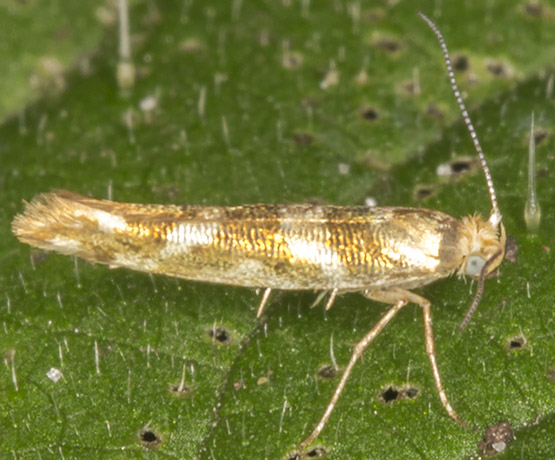
Argyresthia goedartella.   Argyresthiidae.   Resting on Common Nettle in Petts Wood, 7 August 2013.
Argyresthia goedartella.   Argyresthiidae.   Resting on Common Nettle in Petts Wood, 7 August 2013.
And I couldn't resist this little beauty, which I saw on the way through the woods.  It's only about 6mm long, but is quite visible even so, with those gleaming golden wing scales.

Finally ...
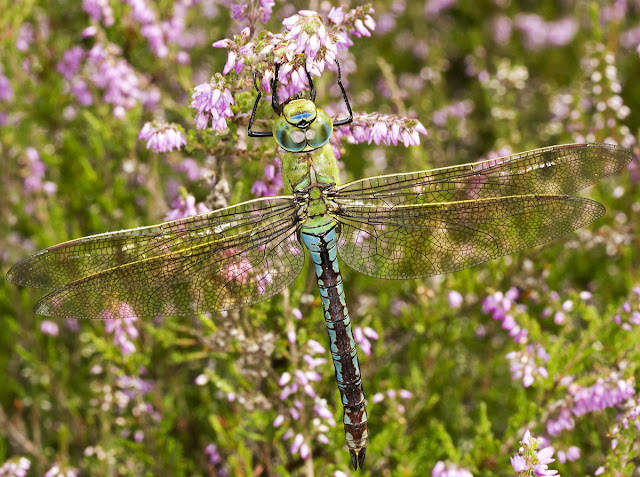
Emperor Dragonfly, Anax imperator.  St Paul's Cray Common, 7 August 2013.
Emperor Dragonfly, Anax imperator.  St Paul's Cray Common, 7 August 2013.
This gorgeous dragonfly was spotted roaming around the heath, and I was able to creep up to it when it came to rest and get this shot. 

The top photo is on my iPhone (so that I could email it to friends); the others were taken with my EOS 6D and 100mm macro lens with ring flash.