Showing posts with label Hayes Common. Show all posts

Wednesday, 22 February 2017

Hazel Flowers.

Female Hazel flower, Corylus avellana.  The Knoll, Hayes, 19 February 2017.
Female Hazel flower, Corylus avellana.  The Knoll, Hayes, 19 February 2017.
Just a short post .. You are probably familiar with the cheerful yellow hazel catkins that appear at this time of year.  You might not have noticed these inconspicuous female flowers that usually appear just after the tree has shed its pollen.

The flowers do not need to be conspicuous because the pollen is spread on the breeze, not by insects.

Male Hazel flowers, Corylus avellana.  The Knoll, Hayes, 19 February 2017.
Male Hazel flowers, Corylus avellana.  The Knoll, Hayes, 19 February 2017.
Here's a close-up of catkins on the same tree. You can see that although there are grains of pollen stuck to it, the actual anthers are all empty and the yellow tone is much muted.

Friday, 27 January 2017

Things Grow on Trees.

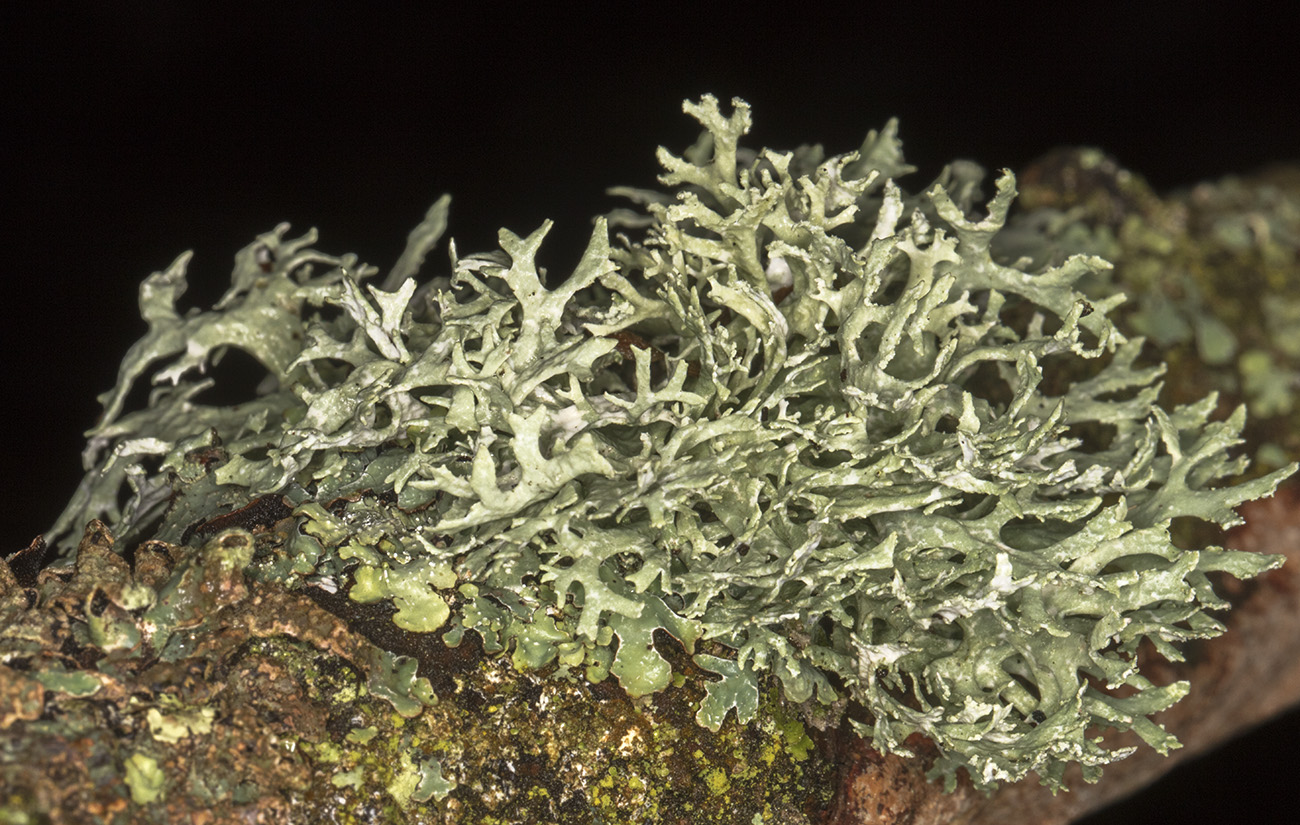
Oak with Flavoparmelia caperata.  Hayes Common, 30 December 2016.
Oak with Flavoparmelia caperata.  Hayes Common, 30 December 2016.
Things grow on trees, and I don't mean just fungi, which grow on trees because they are eating the trees.  I mean things that just use the trees as a place to rest, where they can get some light, and stand less chance of being grazed or trodden on.

In the UK, it's mostly lichens, mosses and liverworts.  Other countries with different biota and climates can have a much more extensive range of plants that behave like this.  The tree in the top photo has some moss and some large patches of a distinctive bluish-green lichen, Flavoparmelia caperata.  As you can see, you don't need to go far from a road to find something like this.

Usually, they are high up in the trees, but it is possible to find spots like this where they are arrayed near the ground where you can get a good look.

Oak branch with a range of mosses and lichens.  Hayes Common, 30 December 2016.
Oak branch with a range of mosses and lichens.  Hayes Common, 30 December 2016.
As here; some of it is high up, but there's also that long, long low branch covered with greenery.

Evernia prunastri, Oakmoss.  On an oak branch on Hayes Common, 2 January 2017.
Evernia prunastri, Oakmoss.  On an oak branch on Hayes Common, 2 January 2017.
In oak woods, there is a great deal of this shrubby Oakmoss, actually a lichen despite its common name.  You can see lots of clumps that have fallen to the ground, perhaps disturbed by squirrels.  It grows on the small branches and twigs.  There are also many other species that are easy to find.

On the trunks you find more of the leafy lichens like the one in the top photo.  Also, things like this:
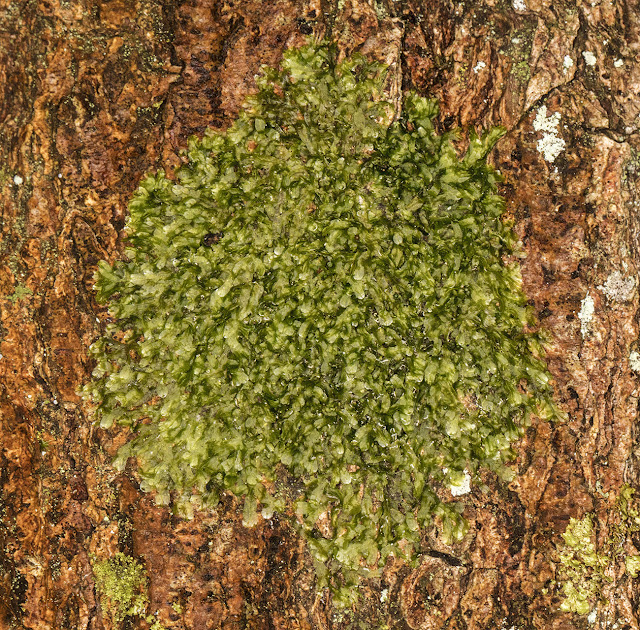
Metzgeria furcata, Forked Veilwort, on oak.  Hayes Common, 30 December 2016.
Metzgeria furcata, Forked Veilwort, on oak.  Hayes Common, 30 December 2016.
This is on an oak trunk.  You might think it looks mossy, but close up:

Metzgeria furcata, Forked Veilwort, on oak.  Hayes Common, 30 December 2016.
Metzgeria furcata, Forked Veilwort, on oak.  Hayes Common, 30 December 2016.
Those delicate flat forked straps are not moss leaves at all, but the thallus of a common liverwort, Metzgeria furcata. 

You don't need to go into the woods to see this sort of thing.  Here's a local street tree.

Tree on Bourne Vale, Hayes, 13 January 2017.
The marker shows where I spotted a tiny clump of moss.

Syntrichia laevipila, Small Hairy Screw-moss, on the bark of a tree trunk on Bourne Vale, Hayes, 13 January 2017.
I have rotated the photo to put the moss in a more familiar orientation, but you can see it's growing on rough bark.  There are also several lichens nearby.  There are not many records of Syntrichia laevipila in this area, so this was a good find.

From a distance, this tree might look quite bare without its leaves, but if you look at the higher branches from a bit closer:

Lichens on a tree on Bourne Vale, Hayes, 13 January 2017.
You can see that it is absolutely covered with, not only lichens, but there will also be mosses, liverworts and algae.  And that's on a busy suburban street. 

I haven't mentioned algae before, but only because they are so small that I can't produce decent photos of them.  They are there alright.

Thursday, 12 January 2017

Showy and Common

Trametes hirsuta, Hairy Bracket.  High Elms Country Park, 8 January 2017.
Trametes hirsuta, Hairy Bracket.  High Elms Country Park, 8 January 2017.
In this post are two rather similar fungi that produce showy displays when they are fresh.  This first one is Hairy Bracket, Trametes hirsuta.  Similar to, and nearly as common as Turkeytail, Trametes versicolor.  The individual brackets are a couple of inches across and, when young, they are quite hairy.

Trametes hirsuta, Hairy Bracket.  High Elms Country Park, 8 January 2017.
Trametes hirsuta, Hairy Bracket.  High Elms Country Park, 8 January 2017.
They can completely cover a dead log, like this.  The colour forms range from light brown to almost black, and the zoning effect you can see here makes it an easily recognisable species (except that there is another similar one - a common problem for identifiers! - which has larger brackets.)

The second fungus in this post also produces many small brackets, and can also cover dead wood.

Stereum hirsutum, Hairy Curtain Crust.  High Elms Country Park, 2 January 2017.
Stereum hirsutum, Hairy Curtain Crust.  High Elms Country Park, 2 January 2017.
It can even have a similar zoned appearance, as you can see here.

Stereum hirsutum, Hairy Curtain Crust.  High Elms Country Park, 2 January 2017.
Stereum hirsutum, Hairy Curtain Crust.  High Elms Country Park, 2 January 2017.
And, as you might expect from its name, it's hairy!

Stereum hirsutum, Hairy Curtain Crust.  Topside and underside.  High Elms Country Park, 2 January 2017.
Stereum hirsutum, Hairy Curtain Crust.  Topside and underside.  High Elms Country Park, 2 January 2017.
But the hairs last longer.  Old Turkeytail does not look particularly hairy, and the brackets seem quite thin.  And if you are ever in doubt about which one you are looking at, the underside is completely different.  That last photo shows the underside of Hairy Curtain Crust on the right.  Here is the underside of Turkeytail:

Trametes versicolor, Turkeytail.  Underside.  High Elms Country Park, 8 January 2017.
Trametes versicolor, Turkeytail.  Underside.  High Elms Country Park, 8 January 2017.
Very obviously covered with pores. 

Monday, 26 December 2016

Winter Oysterlings

Panellus stipticus, Bitter Oysterling.  Hayes Common, 28 October 2015.
Panellus stipticus, Bitter Oysterling.  Hayes Common, 28 October 2015.
Here are a couple of oysterling fungi that grow on dead wood.  This first one, the Bitter Oysterling, grows in the normal fungus season and well into the winter.  It's easily recognised by the crackle finish of the upper surface.

These ears are only one or two inches across.  The stem of an oysterling, like that of a more normal oyster mushroom, is at one side.

Panellus stipticus, Bitter Oysterling.  Hayes Common, 28 October 2015.
Panellus stipticus, Bitter Oysterling.  Hayes Common, 28 October 2015.
Here's the underside, showing the gills spread out like a fan.  I have seen a few of these in the woods this December, but I only had my iPhone with me and my photos are not as good as these I took last year.

Another oysterling is typically found in the winter.

Panellus serotinus, Olive Oysterling.  Hayes Common, 11 December 2016.
Panellus serotinus, Olive Oysterling.  Hayes Common, 11 December 2016.
I spotted this Olive Oysterling over a week into December, on a dead Silver Birch stump.  It's softer than the Bitter Oysterling, with a slimy cap, and only lasts a couple of weeks in its prime.  It's not scarce, but I have not seen it very often, probably because it doesn't last. 

Panellus serotinus, Olive Oysterling.  Hayes Common, 11 December 2016.
Panellus serotinus, Olive Oysterling.  Hayes Common, 11 December 2016.
The gills are more delicate than those of the Bitter Oysterling, and that mottled band where the stem meets the gills is typical of this species.

There are other Panellus species, but I have yet to encounter them.

Wednesday, 21 December 2016

Frosty Virgins

Hygrocybe virginea, Snowy Waxcap.  Hayes Common, 19 November 2016.
Hygrocybe virginea, Snowy Waxcap.  Hayes Common, 19 November 2016.
"virginea" does mean virgin in Latin, but it also means unworked land, which is more appropriate for this small Snowy Waxcap mushroom.  This photo is from a walk in November just after a frosty night.

Hygrocybe virginea, Snowy Waxcap.  Hayes Common, 19 November 2016.
Hygrocybe virginea, Snowy Waxcap.  Hayes Common, 19 November 2016.
This is what's known as unimproved grassland, meaning no-one has put fertiliser on it.  So you get a range of wild flowers, and the grasses are not the coarse and vigorous types that like lots of nitrates.  Farmers might think that's an improvement .. ecologists, less so.

On the same walk I saw another, even more common fungus.

Woodland leaf litter and a dead stump.  Hayes Common, 22 November 2016.
Woodland leaf litter and a dead stump.  Hayes Common, 22 November 2016.
This is a path through the woods.  You can see holly bushes, and the leaf litter tells you that this is an oak wood.  Holly is a common and vigorous undergrowth.  (I took this shot a couple of days later to set the scene)

Xylaria hypoxylon, Candlesnuff.  Hayes Common, 19 November 2016.
Xylaria hypoxylon, Candlesnuff.  Hayes Common, 19 November 2016.
Candlesnuff is a small fungus that is very often found on moist stumps.  It gets its name from its appearance of a candle wick that has been snuffed out.

Xylaria hypoxylon, Candlesnuff.  Hayes Common, 19 November 2016.
Xylaria hypoxylon, Candlesnuff.  Hayes Common, 19 November 2016.
The white areas are the spore-bearing part, and when they are ripe like this, you can see clouds of spores being dispersed if you tap them.

Also on this walk I saw this Oak Bush-cricket out very late in the season.

Oak Bush-cricket, Meconema thalassinum.  Female.  Hayes Common, 19 November 2016.
Oak Bush-cricket, Meconema thalassinum.  Female.  Hayes Common, 19 November 2016.
It does not look very healthy.  It's probably completely worn out and not happy with the cold weather - it won't survive much longer.  At its rear end is its long curved ovipositor, which it uses to dig under the bark of oak trees to lay its eggs.  That bark is tough stuff and it must be hard work to get in there.

Next I'll post some December fungi.

Friday, 9 December 2016

Small and perhaps a bit Too Colourful

Phlebia radiata, Wrinkled Crust.  Hayes Common, 16 November 2016.
Phlebia radiata, Wrinkled Crust.  Hayes Common, 16 November 2016.
There's a lot of this Wrinkled Crust around this year, on dead broadleaved trees of various species.  If you look at this photo:

Pond on Hayes Common, 23 November 2016.
You can just about see orange markings on that trunk in the foreground.  So despite the bright colour, they are not all that conspicuous.

On the same trunk are some other small, colourful fungi.

Ascocoryne sarcoides or Ascocoryne cylichnium.  Pond on Hayes Common, 23 November 2016.
Ascocoryne sarcoides or Ascocoryne cylichnium.  Pond on Hayes Common, 23 November 2016.
There are two Ascocoryne species that can't be separated without a microscope.  While looking at this photo, you can also see a black "bootlace" of the sort that Honey Fungi (Armillaria species) use to spread - very effectively - from tree to tree and along a trunk.

Calocera cornea, Small Stagshorn.  Dacromyces stillatus, Common Jellyspot, in the background.
Pond on Hayes Common, 25 November 2016.
Also on that trunk, two orange fungi,one small and the other tiny.  Small Stagshorn is easy to see when you get close, but the little orange blobs of Common Jellyspot are harder to see unless they crowd together in bigger clumps than this.

A short distance away, on a stump which was actually in the water, was this:

Unidentified Myxomycete.  Hayes Common, 13 November 2016.
Unidentified Myxomycete.  Hayes Common, 13 November 2016.
Slightly blurred because it was out of reach of a steady hand-held photo.  This is a slime mould or Myxomycete, not a fungus.  They are even more ephemeral than fungi, fruiting and dying back in a couple of days.   I have not been able to identify these purple blobs on stalks.

This is another slime mould:

Myxomycete.  Trichia species.  Hayes Common, 18 November 2016.
Myxomycete.  Trichia species.  Hayes Common, 18 November 2016.
It looks like an immature Trichia.  All these species like it wet - well, damp anyway.  In this particular hollow they certainly have it that way.  If you compare the photo above with the one in the previous post taken a few days earlier, you will see that the water level has risen noticeably.  The Inkcaps featured in that post are now under water, as is the stump on which I saw both of these slime moulds.

In fact .. here is the same hollow in February 2014:

Pond on Hayes Common, 9 February 2014.
Taken from the same angle, but from higher up, for obvious reasons.

Saturday, 3 December 2016

Fungi In Hiding

Coprinopsis atramentaria, Common Inkcap.  Hayes Common, 18 November 2016.
Coprinopsis atramentaria, Common Inkcap.  Hayes Common, 18 November 2016.
Fungi are often not easy to see until you train your perception into looking for the right things.  For example, recently I looked into a hollow on my local common that contains a pond.  I saw some interesting things straight away, but it wasn't until I went back and walked around looking carefully that I saw other, quite large fungi. 

Coprinopsis atramentaria, Common Inkcap.  Hayes Common, 18 November 2016.
Coprinopsis atramentaria, Common Inkcap.  Hayes Common, 18 November 2016.
If you weren't looking down you might walk right past these.  Although they are called Common Inkcaps, I have not seen this species before.  These are growing in part of the hollow that is usually underwater. 

They are called Inkcaps because ...

Coprinopsis atramentaria, Common Inkcap.  Hayes Common, 13 November 2016.
Coprinopsis atramentaria, Common Inkcap.  Hayes Common, 13 November 2016.
When they mature, they produce jet black spores and dribble them out in lots of fluid, which was actually once used as ink.  

It's possible for quite colourful fungi to be disguised too, among the yellows and browns of leaf litter.

Gymnopilus penetrans, Common Rustgill.  Hayes Common, 16 November 2016.
Gymnopilus penetrans, Common Rustgill.  Hayes Common, 16 November 2016.
On a stump in the same hollow is this Rustgill, and I had to step up close to be sure I was seeing what I thought I was.

Gymnopilus penetrans, Common Rustgill.  Hayes Common, 16 November 2016.
Gymnopilus penetrans, Common Rustgill.  Hayes Common, 16 November 2016.
Up close it looks impossible to disguise, but it's a very similar colour to some of the Oak leaf litter that surrounds it.

Here is the hollow ...

Logs and pond on Hayes Common, 18 November 2016.
That colourful Rustgill is on the low stump in the left close foreground.  (The Inkcaps are to the left of the mound in the background.)

There are some more vivid fungi on that big log, but they are small.  Next time ...

Wednesday, 10 August 2016

Windy Woods


Oak tree by the railway path West Wickham to Hayes, 29 July 2016.
Oak trees are known for dropping branches unpredictably.  Where they grow near footpaths, site managers usually make sure that any overhanging branches are cut back, and you can see in this photo where that has been done.  But even though it has not been especially windy, a large branch has still torn itself away.

Fallen Oak branch by the railway path West Wickham to Hayes, 29 July 2016.
This is it, just behind the fence.  It might have fallen on or over the fence, or onto the railway just beyond the tree, or onto a train.  Oaks are unpredictable.

Scots Pine blown over by storm Katie at the edge of Woodland Way in Spring Park.  28 March 2016.
Scots Pine blown over by storm Katie at the edge of Woodland Way in Spring Park.  28 March 2016.
Of course, when there are high winds, all trees are susceptible.  This Scots Pine looked strong, but came down across a footpath during Storm Katie. 

Scots Pine blown over by storm Katie at the edge of Woodland Way in Spring Park.  28 March 2016.
Scots Pine blown over by storm Katie at the edge of Woodland Way in Spring Park.  28 March 2016.
The trunk has split.  Close examination showed signs of internal decay, a fungus infection that probably weakened it.

Scots Pine blown over by storm Katie at the edge of Woodland Way in Spring Park.  28 March 2016.
Scots Pine blown over by storm Katie at the edge of Woodland Way in Spring Park.  28 March 2016.
This is the inner face of a piece of one of the splinters, and that whitish substance is fungal mycelium.  Either it has taken advantage of an existing weakness, probably making it worse, or it has caused the weakness in the first place.

Danger during high winds is the reason why woodland walks are cancelled if it is too windy.

Later, I also saw this:

Fallen tree on Hayes Common, 28 April 2016.
Clearly something big has come down on top of the fence, probably also a victim of Storm Katie, and has been partly tidied up. 


Wednesday, 16 March 2016

Some Wood Mosses

Atrichum undulatum, Common Smoothcap.  Hayes Common.  28 February 2016.
Atrichum undulatum, Common Smoothcap.  Hayes Common.  28 February 2016.
Now some mosses from my local woods.  The first photo is an iPhone snap of Atrichum undilatum, a moss that tends to grow on hummocks in the wood, such as might be caused by a falling tree lifting part of its root ball.  Those root ball hummocks stay visible for decades after a tree falls. 

This first one has broad, wavy leaves.

Polytrichastrum formosum, Bank Haircap.  Keston Common, 3 March 2016
Polytrichastrum formosum, Bank Haircap.  Keston Common, 3 March 2016
This second one, Polytrichastrum formosum, grows on the same kind of hummocks, but has harder, spikier leaves.  It's sometimes mistaken for ...

Polytrichum commune, Common Haircap.  Keston Common, 6 March 2016.
Polytrichum commune, Common Haircap.  Keston Common, 6 March 2016.
This one, Polytrichum commune, but this is much larger, grows in looser clumps and likes much wetter ground.  This clump is actually in part of a bog.

Also on Keston Common, but this time actually underwater, you can find ...

Fontinalis antipyretica, Greater Water-moss.  Growing freely in Keston Ponds.   Keston Common, 5 March 2016
Fontinalis antipyretica, Greater Water-moss.  Growing freely in Keston Ponds.   Keston Common, 5 March 2016
Fontinalis antipyretica.  It gets its scientific name from its supposed use in putting out fires, when scooped up by the handful.  I pulled this piece out of the pond to photograph it.  This photo is enlarged, but it's quite a robust moss.

Next, some woodland ground cover.

Friday, 30 October 2015

Stinkhorns

Stinkhorn, Phallus impudicus.  Hayes Common, 28 October 2015.
Stinkhorn, Phallus impudicus.  Hayes Common, 28 October 2015.
Some fungi are smelly.  It's obvious from their name that stinkhorns are prominent among them.

This one is called Phallus impudicus, the unashamed penis.  You can get away with a name like that if you use Latin.  In fact, the word phallus comes originally from Greek, which makes it even more classical and therefore less rude.  Unlike the actual fungus.

This is our commonest stinkhorn, and I came across this lovely specimen on Hayes Common today (as I write).  Stinkhorns emerge from round objects known as eggs, and quickly reach their full size, with a brown cap that smells of excrement.  You can just see the top of the egg at the base of this one.

The brown stuff is called gleba, and contains the spores.  It attracts flies ..

Various flies on a Stinkhorn, Phallus impudicus.  Hayes Common, 28 October 2015.
Various flies on a Stinkhorn, Phallus impudicus.  Hayes Common, 28 October 2015.
Here you can see a dungfly, a flesh fly, a couple of housefly relatives and some smaller flies with red eyes that I don't recognise.  It's clearly popular.  This specimen is quite fresh.  The gleba will be all gone in a day or so, leaving a white skeleton which you can see part of near the top.  The flies will distribute the spores on their legs.  Here's a photo of a stripped one:

Phallus impudicus, Stinkhorn, stripped of its gleba.   Keston Common with the Orpington Field Club, 19 October 2013.
Phallus impudicus, Stinkhorn, stripped of its gleba.   Keston Common with the Orpington Field Club, 19 October 2013.
I have a photo of a similar specimen from Spring Park, West Wickham, but it is being held in the hand of someone who would rather not see that photo on line.

Dog Stinkhorn, Mutinus caninus.  West Wickham Common, 27 October 2015.
Only the day before I saw the beauty in the first photo, I had seen another stinkhorn species on the common next door.  This Dog Stinkhorn has fallen over, and I was actually thinking about it and wishing I could have seen it while it was still upright when I came across the fresh P. impudicus.

You can see that the two are very similar in form, but the Dog Stinkhorn is slimmer, and usually yellower.

Dog Stinkhorn, Mutinus caninus, with two fresh eggs.  Near Ightham Mote, 4 October 2015.
Dog Stinkhorn, Mutinus caninus, with two fresh eggs.  Near Ightham Mote, 4 October 2015.
Here's a rather mangled Dog Stinkhorn I saw when out with the Orpington Field Club near Ightham Mote a couple of weeks ago.  You can see the empty egg it grew from on the right, and there are also two developing eggs in this scene.  This also gives you a good idea of how soft and gooey the gleba is.  If you see a stinkhorn, I suggest you should not touch the smelly gleba.  Just have a cautious sniff and then step back.

Here's one from High Elms in 2013, still fresh and upright:

Mutinus caninus, Dog Stinkhorn.  Orpington Field Club outing to High Elms Country Park, 12 October 2013.
Mutinus caninus, Dog Stinkhorn.  Orpington Field Club outing to High Elms Country Park, 12 October 2013.
I have found stinkhorns before by smelling them first, then looking around.  You might think a thoughtless dog owner has just passed, or paused, at that spot, and indeed it might be so, but on the other hand you might be lucky! 

Stinkhorns are always an interesting find.