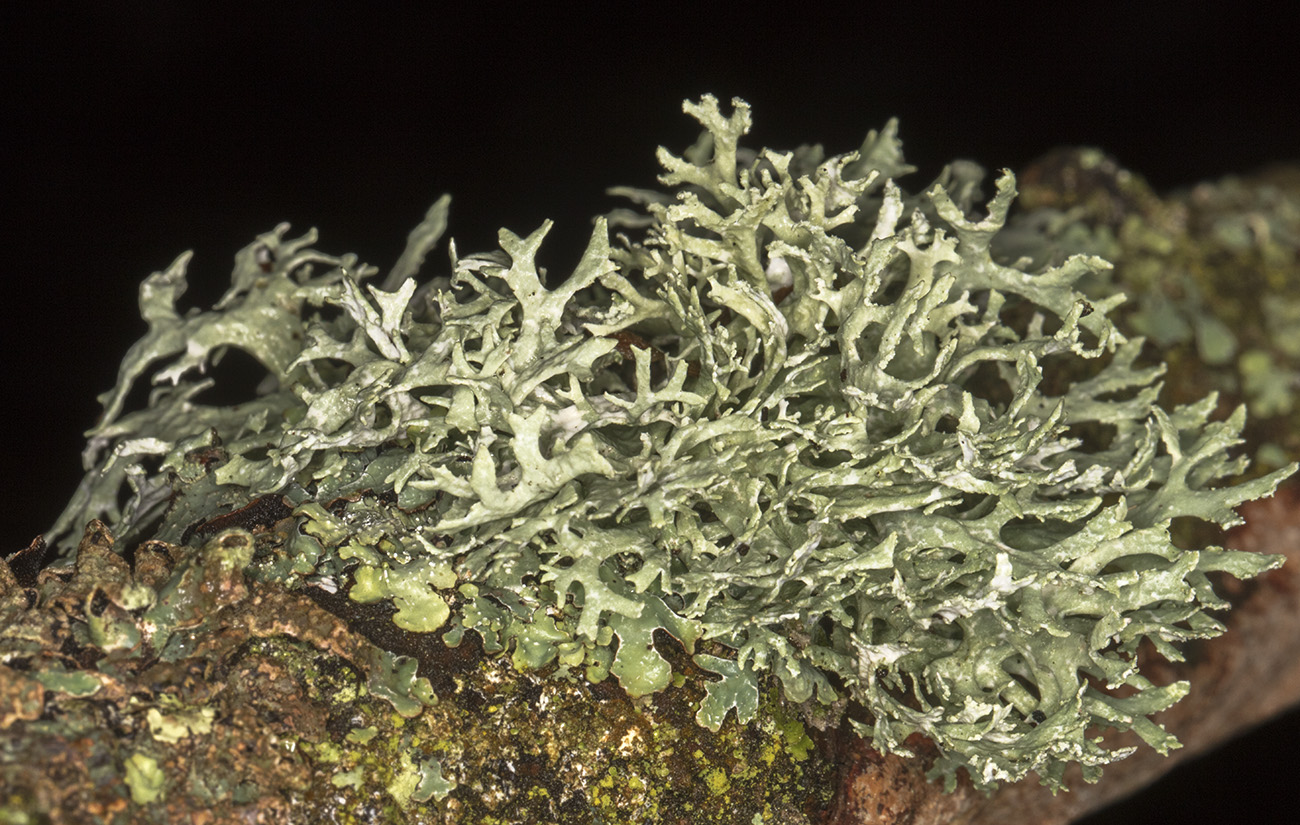
Showing posts with label lichen. Show all posts

Friday, 5 May 2017

Some JCP Photos

Scots Pine, Pinus sylvestris.  Jubilee Country Park, 30 April 2017.
Scots Pine, Pinus sylvestris.  Jubilee Country Park, 30 April 2017.
There was a lichen walk in Jubilee Country Park last weekend, led by Ishpi Blatchley, or local lichen expert.  I took the opportunity to take some photos of a range of subjects .. this one shows the male "cones" of a Scots Pine, shedding pollen.  There are lots of little pollen grains stuck to the sort of spider webbing which you can find almost everywhere in the countryside.

Oak Apple gall.  Jubilee Country Park, 30 April 2017.
Oak Apple gall.  Jubilee Country Park, 30 April 2017.
There were several of these galls, looking large and apple-like, on an oak tree that was right behind Isphi as she gave her introductory talk.  I was itching to take a shot but waited until later as that seemed more polite!  These growths are caused by the aptly-named  Oak Apple Gall Wasp, Biorhiza pallida.  There are hundreds of plant galls caused by a range of insects that make plants grow homes for them.  Oaks have more types of gall than most plants.

Larva of Orthosia cerasi, Common Quaker. Jubilee Country Park, 30 April 2017.
This caterpillar was munching on a Field Maple at the edge of the car park.  It was identified for me later (caterpillars are hard!) as a Common Quaker,  a type of moth that is easy to find early in the year.  I was pleased to get a shot that showed the head and the whole body structure so clearly.  It's not as easy as you might think, because they keep on the move and their heads go from side to side.

Parmelina pastillifera.  Parmeliaceae.   Jubilee Country Park, 1 May 2017.
Parmelina pastillifera.  Parmeliaceae.   Jubilee Country Park, 1 May 2017.
Finally, an actual lichen!  Ishpi was pleased to find this Parmelina pastillifera as she only has three other sightings in the London Borough of Bromley (though it's not rare in the UK as a whole).  This was on an oak branch and Ishpi was drawn to it by its steely glint. 

Parmelina pastillifera.  Parmeliaceae.   Jubilee Country Park, 1 May 2017.
Parmelina pastillifera.  Parmeliaceae.   Jubilee Country Park, 1 May 2017.
I wasn't happy with the photos I took on the day so I went back the next day to improve on them.  I opened the iris and sped up the shutter.  This gives less depth of field, but better sharpness and less motion blur.  (As I take these one-handed, holding the subject in place with my other hand, motion blur can be a problem, especially on a long springy tree branch.)

Those little bumps are isidia, little outgrowths containing both the fungus and alga component of the lichen.  It can reproduce if these growths break off and are scattered.  Their shape on this specimen helps to identify it.


Friday, 3 February 2017

Ultraviolet Lichens

Xanthoria parietina on a brick wall in Hayes by UV light. 21 January 2017.
Some lichens light up in vivid colours under ultraviolet light.  You have to go out in dark night to see this properly.  This can be an aid to identification, but the most vivid ones are pretty easy to identify anyway ..

Xanthoria parietina on a brick wall in Hayes in daylight. 22 January 2017.
The top photo is the right-hand patch of this vividly coloured lichen, Xanthoria parietina.  I have adjusted the photo considerably to bring it to roughly what the naked eye sees.  The camera does not pick up the UV light, but there is a strong visible mauve light that goes along with it when the UV torch shines, and I balanced that out.  (I have put the technique I used at the bottom of this post.)  The eye can adjust to that, but the camera needs help.

The UV photographs are interesting.

Lichen community on a brick wall.  Left: daylight.  Right: UV light.
Lichen community on a brick wall.  Left: daylight.  Right: UV light.
There are 7 or 8 species of lichen in this small space, just a few square inches.  You can see some more of the Xanthoria on the right.  There are some other leafy lichens, green ones, and some that form crusts of various green, yellow and orange shades.  (Also, some moss.)

Looking at this, you might think that all the yellowy-orange lichens glow orange in the UV light, but that's not so - there is a patch towards the top right of a yellow species that doesn't respond to the torch.  That's probably a Candellaria species, which in theory should have a slight glow, but there is none here.  Another species that has not read the book, perhaps.  The difference in glow is because there is more than one chemical that can give a lichen a yellow colour.  So you can use this UV glow effect to help identify a lichen.

Lichen community on a brick wall.  Left: daylight.  Right: UV light.
Lichen community on a brick wall.  Left: daylight.  Right: UV light.
But in this pair of photos from nearby, you can see at the top right an orangish lichen that glows faintly under the UV torchlight, which can be compared with the patches of Xanthoria at the top left.  I think the white one is just reflective, not actually glowing.  I can not give you any other species names for this photo.  Maybe when I know more ...

Lichens are various and complicated and I have only just scratched the surface (that's a joke if you are a lichenologist.)

=======================================================================

How to remove the mauve tint from photos of UV glow using a good camera and Photoshop:

First, photograph your UV torchlight on a white background in a dark place.  Use this photo as the basis for a custom white balance setting.

Then photograph your subject at night, shading with your body from any street lighting and evening out the UV torchlight across the subject as much as you can.  This can be tricky if you are holding everything in your hands.

Take a high quality JPEG from the camera and edit in Photoshop.  Sample the mauve background colour cast from a light area with the eye dropper tool.  Create a new empty layer and fill it with the sampled colour.  Invert this layer's colour to get its opposite, which will be a green shade (Control-I does this).  Make that layer a colour type layer.  Adjust its opacity until there is as little mauve or green as possible in the resulting picture.  You're done!  But as you can see from my photos above, the result does vary a bit from shot to shot and no one photo should be accepted as definitive.  There are variations in cameras' sensors and software, also the exact shades sampled in Photoshop, and computer monitors vary too.

Friday, 27 January 2017

Things Grow on Trees.

Oak with Flavoparmelia caperata.  Hayes Common, 30 December 2016.
Oak with Flavoparmelia caperata.  Hayes Common, 30 December 2016.
Things grow on trees, and I don't mean just fungi, which grow on trees because they are eating the trees.  I mean things that just use the trees as a place to rest, where they can get some light, and stand less chance of being grazed or trodden on.

In the UK, it's mostly lichens, mosses and liverworts.  Other countries with different biota and climates can have a much more extensive range of plants that behave like this.  The tree in the top photo has some moss and some large patches of a distinctive bluish-green lichen, Flavoparmelia caperata.  As you can see, you don't need to go far from a road to find something like this.

Usually, they are high up in the trees, but it is possible to find spots like this where they are arrayed near the ground where you can get a good look.

Oak branch with a range of mosses and lichens.  Hayes Common, 30 December 2016.
Oak branch with a range of mosses and lichens.  Hayes Common, 30 December 2016.
As here; some of it is high up, but there's also that long, long low branch covered with greenery.

Evernia prunastri, Oakmoss.  On an oak branch on Hayes Common, 2 January 2017.
Evernia prunastri, Oakmoss.  On an oak branch on Hayes Common, 2 January 2017.
In oak woods, there is a great deal of this shrubby Oakmoss, actually a lichen despite its common name.  You can see lots of clumps that have fallen to the ground, perhaps disturbed by squirrels.  It grows on the small branches and twigs.  There are also many other species that are easy to find.

On the trunks you find more of the leafy lichens like the one in the top photo.  Also, things like this:

Metzgeria furcata, Forked Veilwort, on oak.  Hayes Common, 30 December 2016.
Metzgeria furcata, Forked Veilwort, on oak.  Hayes Common, 30 December 2016.
This is on an oak trunk.  You might think it looks mossy, but close up:

Metzgeria furcata, Forked Veilwort, on oak.  Hayes Common, 30 December 2016.
Metzgeria furcata, Forked Veilwort, on oak.  Hayes Common, 30 December 2016.
Those delicate flat forked straps are not moss leaves at all, but the thallus of a common liverwort, Metzgeria furcata. 

You don't need to go into the woods to see this sort of thing.  Here's a local street tree.

Tree on Bourne Vale, Hayes, 13 January 2017.
The marker shows where I spotted a tiny clump of moss.

Syntrichia laevipila, Small Hairy Screw-moss, on the bark of a tree trunk on Bourne Vale, Hayes, 13 January 2017.
I have rotated the photo to put the moss in a more familiar orientation, but you can see it's growing on rough bark.  There are also several lichens nearby.  There are not many records of Syntrichia laevipila in this area, so this was a good find.

From a distance, this tree might look quite bare without its leaves, but if you look at the higher branches from a bit closer:

Lichens on a tree on Bourne Vale, Hayes, 13 January 2017.
You can see that it is absolutely covered with, not only lichens, but there will also be mosses, liverworts and algae.  And that's on a busy suburban street. 

I haven't mentioned algae before, but only because they are so small that I can't produce decent photos of them.  They are there alright.

Saturday, 21 January 2017

Three Related Lichens

Lecanora chlarotera, Lecanora dispersa and Lecanora muralis.  January 2017.
Lecanora chlarotera, Lecanora dispersa and Lecanora muralis.  January 2017.
This is a good season for lichens, so I have been taking some photos of them.

These are three species from the same genus.  The first one, Lecanora chlarotera, grows typically on trees, in a patchwork with some soepcies from different families.

Here's a typical example.

Lichens on a tree high on Kemsing Down, 12 April 2014.
Here it's in a patchwork with Lecidella elaeochroma (black dots) and Physcia tenella (small, leafy).

Lecanora muralis, on the other hand, could not have a more different environment.  It grows all over the pavements, often in busy areas.   It prefers not to be walked on too much, but can survive a bit of footfall.

Lecanora muralis,  pavement of Mead Way, Hayes, 29 January 2016.
Lecanora muralis,  pavement of Mead Way, Hayes, 29 January 2016.
Here it is on asphalt.  It can easily be mistaken for chewing gum at a casual glance.

The third example, in the middle of the top picture, is Lecanora dispersa.  This is either rarer or just less often recorded.  It's not so easy to see, because what you do see is little more than an array of the fruits, without a visible thallus.  I found that one right next to L. muralis, and I only found it when looking at my photos.

Lecanora dispersa on the pavement on Bourne Way, Hayes, 12 January 2017.
Those light orange dots are another lichen species - I suspect young spots of a Candelariella - and I think the black areas are probably yet another, though I can't be sure, not being a lichen expert.

Thursday, 30 June 2016

Old Lodge

Old Lodge Nature Reserve, 11 June 2016.
A short walk in the Old Lodge Nature Reserve, part of the Ashdown Forest.  This site is mostly of interest to birders, but it is a nice piece of heathland for anyone.  The view above is fairly typical.  It's a mixture of heather, grass and rushes, with a few small ponds on the way down the path you can see, with colourful dragonflies, and some stands of pines.

The item hung up on a post is a beater, for use in case of fire.   There are a number of these beaters placed around the site, very visible and very easy to grab.

Short grass with flowers.
At the top of the slope, where the ground is reasonably dry, the short grass actuall contains lots of small sedges and some flowering plants.  These little white flowers are Heath Bedstraw, and the yellow ones are Tormentil. 

Lichen, Cladonia portentosa, among low heather.  Old Lodge Nature Reserve, 11 June 2016.
Lichen, Cladonia portentosa, among low heather.  Old Lodge Nature Reserve, 11 June 2016.
But part way down the slope I found some of this lichen, Cladonia portentosa, covering the ground.  This must be a particularly dry section.  This lichen doesn't grow like this where there is much competition for space. 

I saw lots of small brown moths flitting about, and photographed two that I thought were different species.

Common Heath, Ematurga atomaria.  Female.  Old Lodge Nature Reserve, 11 June 2016.
Common Heath, Ematurga atomaria.  Female.  Old Lodge Nature Reserve, 11 June 2016.
I thought this was a Latticed Heath, but a second look shows that it is not really latticed.  It's a Common Heath, a very variable species.

Common Heath, Ematurga atomaria.  Male.  Old Lodge Nature Reserve, 11 June 2016.
Common Heath, Ematurga atomaria.  Male.  Old Lodge Nature Reserve, 11 June 2016.
This is the same species.  The difference in appearance isn't just due to these being different genders, though the female is usually lighter than the male.  It's a more general variability.

You can tell the male by its lush feathery antennae, used to detect female pheromones.

Further down the slope I started to see fewer brown moths and instead came across some whitish ones.  I followed a few of these, but whenever they made a landing they dived for cover, so the best shot I was able to get was partly obstructed.

Grass Wave, Perconia strigillaria.  Old Lodge Nature Reserve, 11 June 2016.
Grass Wave, Perconia strigillaria.  Old Lodge Nature Reserve, 11 June 2016.
Some people look for birds.  I looked for moths ...

Friday, 25 April 2014

Kemsing final

Snail patterns on a Silver Birch cultivar.  Churchyard of the Church of St. Mary, Kemsing, with the Orpington Field Club on 12 April 2014.
Snail patterns on a Silver Birch cultivar.
Churchyard of the Church of St. Mary, Kemsing, with the Orpington Field Club on 12 April 2014.
Some other things seen at Kemsing.  This first photo is the bark of a Silver Birch, a white-barked cultivar I think, with tracks where something, probably a snail, has browsed away the algae that grow there.  You can see the triangular marks of each swipe of its tongue.  The whole trunk was covered with these intricate patterns.

Galls on Sycamore caused by Aceria macrorhynchus, a mite.
Kemsing Down with the Orpington Field Club on 12 April 2014.
This is the leaf of a Sycamore with little bumps that are the homes of a mite called Aceria macrorhynchus. The mite makes the leaf grow these small hollow protrusions, a type known as nail galls, where it lives in comfort, making its entry from under the leaf.

Five lichens.  Ramalina fastigiata, Xanthoria parietina, Lecidella elaeochroma, Lecanora chlarotera, Physcia tenella.  Kemsing Down with the Orpington Field Club on 12 April 2014.
Five lichens.  Ramalina fastigiata, Xanthoria parietina, Lecidella elaeochroma, Lecanora chlarotera, Physcia tenella.
Kemsing Down with the Orpington Field Club on 12 April 2014.
Trees standing out in the grass at the top of the hill were covered with lichens.  They grow in great competition with each other for living space, and in this photo there are five different species showing three of the various different typical patterns of lichen growth.

On the right, looking bushy, is a fruticose Ramalina fastigiata.  The yellow foliose lichen is Xanthoria parietina, very common on trees and walls.  At the bottom left is a small grey-green foliose Physcia tenella.

Crustose, and adhering firmly to the trunk, are Lecidella elaeochroma, with black fruiting bodies, and Lecanora chlarotera, with fawn-centred "jam tart" fruiting bodies.  These two form patchworks on many treetrunks. 

Rust fungus, Puccinia lagenophorae, on Groundsel, Senecio vulgaris.  Churchyard of the Church of St. Mary, Kemsing, with the Orpington Field Club on 12 April 2014.
Rust fungus, Puccinia lagenophorae, on Groundsel, Senecio vulgaris.
Churchyard of the Church of St. Mary, Kemsing, with the Orpington Field Club on 12 April 2014.
This is a rust fungus,  Puccinia lagenophorae, on the leaf of a Groundsel.  Magnified like this, it looks like a series of tiny flowers.  This Groundsel is suffering, but there were plenty of uninfected ones around.

Elder, Sambucus nigra, with variegated leaves.  Churchyard of the Church of St. Mary, Kemsing, with the Orpington Field Club on 12 April 2014.
Elder, Sambucus nigra, with variegated leaves.
Churchyard of the Church of St. Mary, Kemsing, with the Orpington Field Club on 12 April 2014.
Finally, this is a naturally variegated branch of an Elder.  The yellow stripes might be the result of a virus infestation. The leaves normally look quite plain, like those in the background, which are on the same plant.  It's a pretty effect, though, and unusual.  The variegated forms you can buy for the garden have yellow or white edges to the leaves, nothing like these striped veins.

Tuesday, 5 February 2013

Otford and the Darent Valley

View across the Darent valley to Meenfield Wood and the war memorial, on the hillside opposite Shoreham, the next small town along the valley from Otford. 2 February 2013.
View across the Darent valley to Meenfield Wood and the war memorial, on the hillside opposite Shoreham,
the next small town along the valley from Otford. 2 February 2013.
It's winter and most of the OFC outings have been for birds, which are not my interest.  This was more of a walk along the valley, keeping an eye out for any interesting natural history.  It was a cold and windy day, in the middle of a rainy season, but on this day we had intermittent sunshine, which made a nice change.

It was interesting to see that war memorial - the cross on the hillside - because then I realised I was within sight of a walk in May last year, which I do not seem to have put on the blog.  We walked along the treeline on that hillside and I saw the cross from above.

The water you can see is flooded fields; the small river is behind the trees.

We saw a few wildflowers, including snowdrops and primroses, but they were on a bank outside some houses; perhaps they were seeding themselves, but they must have been planted originally.  And some flowers were survivors from last year.  The only true wild spring flower we saw was a Lesser Celandine.

Lesser Celandine, Ranunculus ficaria.  Otford, 2 February 2013.
Lesser Celandine, Ranunculus ficaria.  Otford, 2 February 2013.
A pretty little flower, related to Buttercups.  But winter and early spring are good times to look for mosses and lichens, and we saw some of those too.

Syntrichia intermedia.  Darent valley, 2 February 2013.
Syntrichia intermedia.  Darent valley, 2 February 2013.
This lovely thing grows in round cushiony clumps on walls.

Ramalina fastigiata.  Darent valley, 2 February 2013.
Ramalina fastigiata.  Darent valley, 2 February 2013.
This, as you can see, grows on twigs. 

I was using a new camera that has GPS built in, and there is software which produces a track of where you have been with it:

Walking route in the Darent valley, 2 February 2013.
We walked this route anticlockwise starting at the bottom right.  The pins mark where the photos were taken; in order, view - lichen - moss - flower.  Of course, I took more than that; enough for me to show a few next time.  Please ignore the trail off to the bottom left; I forgot to turn off the GPS and it tracked the car all the way home from inside the boot!

Monday, 20 February 2012

A Walk Around Knockholt, Part 1

Orpington Field Club members in the churchyard at Knockholt, with snowdrops. 18 February 2012.
Orpington Field Club members in the churchyard at Knockholt, with snowdrops. 18 February 2012, 10.05 am.
The Orpington Field Club have events arranged for most weekends this year. This one was a walk through fields and woods, following public footpaths, around Knockholt, a village high on the North Downs. I have shown the times of each photo to give the structure of the walk.

I was not expecting to see much botany. We have just had a few cold days and nights, down to under -8C where I live, and some snow, which I expected would kill off anything left from last year and discourage new growth. But there were a few interesting plants, and in general, more to see than I expected.

Rain was forecast, so I took only my small camera, an Ixus 100; it's easier to protect from the wet than a big SLR with a macro lens. It's normally a good camera, but it's less so in poor light conditions, such as in the woods on a cloudy day. Still ...

We started at about 10 am and looked round the churchyard.  Close to the gate was a wooden seat that was so covered with lichens that it must not have been sat on for a long time. The seat itself was just as thickly covered as this back piece.  (I have switched the first two photos around in time so as to put a wide view at the top of this post; I will keep the rest in time order.)

Flavoparmelia caperata on a seat in Knockholt churchyard, covered with lichens. 18 February 2012.
Flavoparmelia caperata on a seat in Knockholt churchyard, covered with lichens. 18 February 2012, 10.02 am.
The churchyard was full of snowdrops. There were thousands in the nearby woods, too; I have never seen so many in one place.

Snowdrops in the churchyard at Knockholt. 18 February 2012.
Snowdrops in the churchyard at Knockholt. 18 February 2012, 10.05 am.
We walked along the road, past a few early Lesser Celandines and some daisies (which seem to flower, if sometimes in small numbers, all year round) and struck off across the fields, at one point coming onto the North Downs Way.  I was in a small group ahead of the others, who were finding Male Ferns and Broad Buckler Ferns.

The North Downs Way near Knockholt.  18 February 2012.
The North Downs Way near Knockholt.  18 February 2012, 10.36 am.
It was good to get past this track into the woods and out of the cold wind.  We started to see a few fungi on felled trees; the usual small brackets, past their best, and a piece of Lumpy Bracket, Trametes gibbosa, which we failed to identify at the time. We passed along the edge of a wood where Douglas Firs were planted.  The coarse texture of their bark made for some fanciful shapes.

Bark of a Douglas Fir, Pseudotsuga species.  18 February 2012.
Bark of a Douglas Fir, Pseudotsuga species.  18 February 2012, 10.56 am.
To one side of the path was a large, dead bracket fungus with a very photogenic texture and appearance.  Where a piece has come away, or been broken off, you can see striations which are the tubes which led to the pores in the lower surface.

Bracket fungus, old and dead. 18 February 2012.
Bracket fungus, old and dead. 18 February 2012, 11.04 am.
There were green things, too. Grasses everywhere, of course, but not in flower.  The trees were covered in mosses, and there were some patches of this liverwort, filmier and flimsier than a moss, which I would expect in damper places.

Metzgeria furcata, a liverwort, on a tree trunk. 18 February 2012.
Metzgeria furcata, a liverwort, on a tree trunk. 18 February 2012, 11.06 am.
I am not really obsessed by fungi, but there are lots around, so it's a good opportunity to learn, and some of them are very photogenic. The small brackets form wonderful patterns. This Turkeytail is very common and makes some lovely shapes.
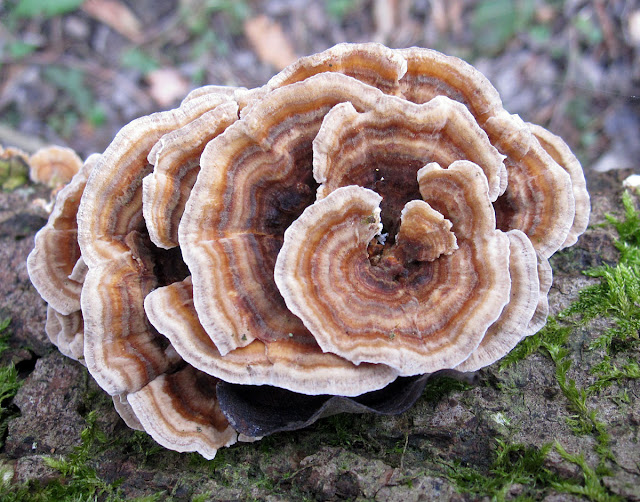
Turkeytail, Trametes versicolor. 18 February 2012.
Turkeytail, Trametes versicolor. 18 February 2012, 11.14 am.
In another section of the woods were several Tutsan specimens; a yellow-flowered Hypericum which is often used as a garden plant. It does also occur as a native, so these are not necessarily garden escapes. These specimens had no flowers, only the dried remains of their black fruits, and the leaves were a bit bedraggled.

Some of the group examining a Tutsan, Hypericum androsaemum. 18 February 2012.
Some of the group examining a Tutsan, Hypericum androsaemum. 18 February 2012, 11.16 am.
Further in, I was intrigued by this rotting branch of what was probably a cherry or a close relative. The outer part of the branches had rotted away almost completely, leaving the inner part surrounded by unbroken bands of bark, which must have been particularly resistant to fungi and beetles.

Decaying branch of a cherry or relative, Prunus species, with the bark still present in strips around the remains of the wood.  18 February 2012.
Decaying branch of a Prunus species, with the bark still present in strips around the remains of the wood.
18 February 2012, 11.36 am.
And later we came upon a group of plants with the unlikely name of Abraham, Isaac and Jacob. Those who had been here before were expecting to see this, and indeed it is spreading though the woods and seems to be thriving. These specimens appear to have been nipped by the frost, and their flower-buds are only just visible among the old and new leaves; they are below and to the right of centre in this photo.  You can also see that these plants are competing with brambles and nettles, so they must be tough.

Abraham, Isaac and Jacob, Trachystemon orientalis.  Flowerbuds look frostbitten.  18 February 2012.
Abraham, Isaac and Jacob, Trachystemon orientalis.  Flowerbuds look frostbitten.  18 February 2012, 11.28 am.
That's about half-way through my photos for this walk, so I will continue next time.

Friday, 6 January 2012

Midwinter in Upper Beechen Wood

Stereum species.  Lullingstone Country Park,  31 December 2011.
Stereum species.  Lullingstone Country Park,  31 December 2011.
This follows on from the last post, about the Orpington Field Club's trip to Lullingstone Country Park on 31 December. At this point we were in a wood, Upper Beechen Wood, at a high point in the park.

There were quite a few felled treetrunks lying around the path, and many of them had colourful or interesting fungi. The first photo is a small bracket only a few inches across, probably a Stereum species as it had no pores on its underside.

Oak Mazegill, Daedalea quercina.  Lullingstone Country Park,  31 December 2011.
Oak Mazegill, Daedalea quercina.  Lullingstone Country Park,  31 December 2011.
This one is larger, and grew up to about a foot across. It's called a Mazegill because of the appearance of the underside.

Down the hill, the path back to the visitor centre was separated from a bridleway by a rough wooden railing, on which were many lichens and some mosses.

An interesting lichen with many black hairs at the fringes.  Probably Parmotrema reticulatum.  Lullingstone Country Park,  31 December 2011.
A lichen with many black cilia, probably Parmotrema reticulatum.  Lullingstone Country Park,  31 December 2011.
This one puzzled those on the trip, but one of the iSpot people thinks it looks like Parmotrema reticulatum. You can see that many black hairs or cilia are growing around the edges. This form, with leafy lobes and a distinct underside, is called foliose.

Ramalina farinacea.  Lichen.  Would have been identified as Evernia prunastri if it was white on the backside, but this seems to be the same on both sides.  Lullingstone Country Park,  31 December 2011.
Ramalina farinacea. Lullingstone Country Park,  31 December 2011.
This form, with a bushy appearance and no distinct upper or lower side, is called fruticose. You have to be careful with these; some species look like this, but on closer examination turn out to have a distinct underside. They are only pretending to be fruticose.

Finally, a pretty moss with lots of fruiting capsules.

Cape Thread-moss, Orthodontium lineare. Lullingstone Country Park, 31 December 2011.
This identification is conditional.  If, when it dries up, the "leaves" curl and twist, it will be something else entirely, not deserving of a name which says it has straight teeth.