Thursday, 16 June 2011

Noctules at Shortlands

Summer chafer, Amphimallon solstitiale, with wings partly extended.  They were swarming around poplar trees and some were on the ground.  Warren Road playing fields, just after sunset on 14 June 2011.
Summer chafer, Amphimallon solstitiale, with wings partly extended.
Warren Road playing fields, just after sunset on 14 June 2011.
Ishpi Blatchley, a local bat expert, let me know that noctule bats had been seen feeding in recreation grounds in Shortlands. This only happens at this time of year so I went out in the evening to see what was there.

I parked at an entrance to Beckenham Place Park where there were several open fields, and a stream, the river Ravensbourne. I also found a fenced-in playing field, and across from that an unfenced one, where I saw someone entering from the far side; it was Ishpi. Two other enthusiasts arrived not long after that.

The photo on the right is once again not a bat. It is one of the insects on which they were feeding. There were hundreds of these summer chafers swarming around poplar trees along the edge of an area of rough, but mown, grass, which from the remains of white line markings is used for cricket and football and perhaps other sports. Some of the chafers were on the ground, which is where we photographed this one. The flash makes it look a light brown; it was darker to the eye in the late evening light.

Only a few minutes after sunset I heard bat sounds on my detector and saw a noctule flying straight across the field. A few minutes after that, more appeared. Soon there were four of them flying at around treetop height, moving around the open area but mostly keeping near to the trees. Their sound on the detector was different from any of the other four bat species I have seen (common and soprano pipistrelles, Daubenton's, and serotines). There were loud, low clopping sounds and at the same time a series of higher chirps, all at about 20 khz. Most of the time it wasn't easy to distinguish the sounds made by individual bats. Sometimes one would swoop low, and occasionally one would fly just overhead, making it easy to see against the sky. They seemed to move faster and flap more often than the serotines I have seen recently.

Every now and then I heard one of them make a feeding buzz, a rapid series of clicks that echolocating bats use as they close in on their prey. Twice, I saw something small fall away from a bat after it made a buzz. Were the chafers getting away, or were the bats just biting off the juicy parts and discarding the rest? They were too far away to tell.

A chafer must be quite a substantial catch for a bat. It would probably be too big for one of the little pipistrelles — I saw one of those too — but the bigger noctules had no trouble. After about half an hour there was only one noctule left, so perhaps the others had had their fill, or they might have gone on to feed somewhere else.

Wednesday, 15 June 2011

Eyed Ladybird

Eyed ladybird, Anatis ocellata, on greater burdock near conifers at High Elms Country Park, 31 May 2011.

Tuesday, 14 June 2011

Country Lane

Horse and rider in North Pole Lane.   Well Wood field trip with the Orpington Field Club, 11 June 2011.
Horse and rider in North Pole Lane.   Well Wood field trip with the Orpington Field Club, 11 June 2011.
This is a true snapshot taken with my Ixus 100 at waist height.

Monday, 13 June 2011

Well Wood Walk

Some of the Orpington Field Club oblivious to all around them.  Next to Well Wood,  11 June 2011.
Some of the Orpington Field Club oblivious to all around them.
Next to Well Wood,  11 June 2011.
A dozen or so members of the Orpington Field Club gathered on Saturday 11th June to wander round Well Wood and its environs and see what could be seen.

Well Wood is not large, but it is big enough to contain several criss-crossing footpaths. It is bounded on two sides by houses, on the third by a road, and the fourth side opens onto farm fields. It has a "friends" group, and this turned out to be one of their work days. We met a small group emerging from the wood with saws and cutting tools. They had been clearing the paths. They were friendly and chatted with some of the OFC while we waited for everyone to arrive.

Walking into the wood, we saw some enchanter's nightshade, another new plant for me, a small spike with straggly white flowers. Then some iridescent brown-and-yellow micromoths were spotted on nettles. They were Nemophora degeerella, so-called longhorns. We saw some which did not have the expected long antennae, and I later found that these are the females.
Ten-spot Ladybird, Adalia decempunctata, on roadside foliage.  Variant colour form.  North Pole Lane, near Well Wood, 11 June 2011.
Ten-spot Ladybird, Adalia decempunctata, on roadside foliage.
Variant colour form.
North Pole Lane, near Well Wood, 11 June 2011.

We moved around the edge of the wood, seeing various unidentified flies, moths and bees; bracket fungi on fallen deadwood; and some of the small black fungi known as King Alfred's cakes because they look like burnt buns. As we approached the field side of the wood, we began to see more insects and some butterflies.

One of us spotted what looked like the nymph of a cricket. I saw some odd little twiggy bundles on bramble leaves, which were identified by our insect expert Graham as the larval case of a moth, Psyche casta. One distinctive-looking lacy-winged creature proved later to be a scorpion fly.

There were more and more butterflies and as we moved into the field it was suddenly sunny and warm. We began to see many large skippers and meadow browns, and the occasional small tortoiseshell. One clump of bramble was almost heaving with them. The plant life was, of course, very different out here as well. There were goat's-beards in the grass; no open flowers, as they close at mid-day, but many of the lovely seed heads, like bigger dandelions.
Meadow brown butterfly, Maniola jurtina, on bramble.  Near Well Wood, 11 June 2011.
Meadow brown butterfly, Maniola jurtina, on bramble.
Near Well Wood, 11 June 2011.

In the hedgerow I saw more of the hedge woundwort that I had seen the morning of the same day in Jubilee Country Park. I couldn't resist bruising a leaf and inhaling the strong pungent smell.

We walked past a large and beautiful oak tree in which a chaffinch was singing loudly. Swifts circled round above the next field over. Magpies foraged in the long grass, in and out of sight among the stalks. I could see the hillside of West Wickham Common and Hast Hill in the distance. A small group of houses in the valley was the village of Nash. Although I live not far away, and had walked through and around Well Wood, I had never been down this footpath.

We reached a narrow country road and followed it for a while. By the end of the path was a clump of black horehound, very similar to hedge woundwort but without its smell. There were some Two-spot and Ten-spot Ladybirds in the hedgerow. The Ten-spot was a colour variant with red spots on a black background.

The road surface was liberally decorated with horse droppings, and indeed we were overtaken by two riders before we turned back through the fields to the wood. Things of interest were still turning up. Today the group had not split up as much as usual, but it was a straggling procession, and I have included a photo of part of the group completely engrossed in an identification. We were waiting for them to notice that we had turned off into the wood, and soon we were back at the car park.

I have added a couple of photos from this trip to my "unidentified" folder; a bee and a beetle. There is also a sawfly from Jubilee Country Park this morning.
Larval case of the moth Psyche casta on bramble leaf.  Well Wood, 11 June 2011.
Larval case of the moth Psyche casta on bramble leaf.  Well Wood, 11 June 2011.

Looking at a hedgerow near Well Wood. The village of Nash is visible to the far left. 11 June 2011.

Large skipper, Ochlodes venatus, feeding on bramble flower.  Male.  Hedge next to Well Wood, 11 June 2011.
Large skipper, Ochlodes venatus, feeding on bramble flower.  Male.  Hedge next to Well Wood, 11 June 2011.

Small tortoiseshell, Aglais urticae, and five meadow browns, Maniola jurtina, feeding on bramble near Well Wood. 11 June 2011.
Small tortoiseshell, Aglais urticae, and five meadow browns, Maniola jurtina, feeding on bramble near Well Wood.
11 June 2011.

Scorpion fly, Panorpa species, female, on a nettle leaf in woodland.  Well Wood, 11 June 2011.
Scorpion fly, Panorpa species, female, on a nettle leaf in woodland.  Well Wood, 11 June 2011.

White bryony, Bryonia dioica, climbing over hawthorn near Well Wood, 11 June 2011.

The photo of the group by a hedgerow, and the white bryony, were taken with my little Canon Ixus 100. All the others in this post were taken with my Canon EOS 450D and the Canon EF 100mm macro lens, often using a ring flash.

Sunday, 12 June 2011

Jubilee Wildflowers

Immature flower head of wild teasel, Dipsacus fullonum.  Jubilee Country Park, 11 June 2011.
Immature flower head of wild teasel, Dipsacus fullonum.
Jubilee Country Park, 11 June 2011.
Summer walks in Jubilee Country Park are always popular. It is a popular park. On Sunday 11th June there was alternating sun and shade, but it was warm enough to be anjoyable.

This walk was led by John Bruce, assisted by Esme, and the first thing we did was look around the car park. Flowers of hedgerows and verges usually turn up in such places, and we found quite a few, such as stinging nettles, brambles, field buttercups, wood avens, creeping cinquefoil.

You might think that some of these are nuisances rather than desirable wildflowers, but nettles and brambles are excellent supporters of insect life and are very desirable for biodiversity.

John gave us a list of 80 plants that we might see in flower. I didn't realise it at the time, but when I got back I looked over the list and realised I had seen all but a handful, though a few were not actually flowering. I saw several plants that were new to me, though most of these are clearly common in this area as no-one else was surprised to see them.
Azure damselflies, Coenagrion puella, near Ray's Pond.  Female above, male below. Jubilee Country Park, 11 June 2011.
Azure damselflies, Coenagrion puella, near Ray's Pond.
Female above, male below.
Jubilee Country Park, 11 June 2011.

This park is famous (among botanists) for its corky-fruited water dropwort, a rare plant in this part of England, but becoming more widespread now by accident. When these meadows have been mown, the machinery has picked up seeds and moved them to other local grasslands. I saw some on Keston Common not long ago. The plant is a small white-flowered umbellifer, rather like a dainty hogweed; nothing like as pretty as the blue chicory which is the park's emblem.

In the grass were large and lush clumps of yellow rattle, which I last saw as small single stems in Darrick Wood meadow. (Later addition: I have since found out that the Jubilee plants are the greater yellow rattle, Rhinanthus angustifolius, so no wonder they were bigger.)  It's interesting to see how apparently similar environments actually allow different groups of plants to flourish. I saw agrimony and red bartsia and all-heal, all new to me.

One meadow had several species of tare and vetch, and here there were also some rather small specimens of common spotted orchid. Everyone is proud of having orchids.

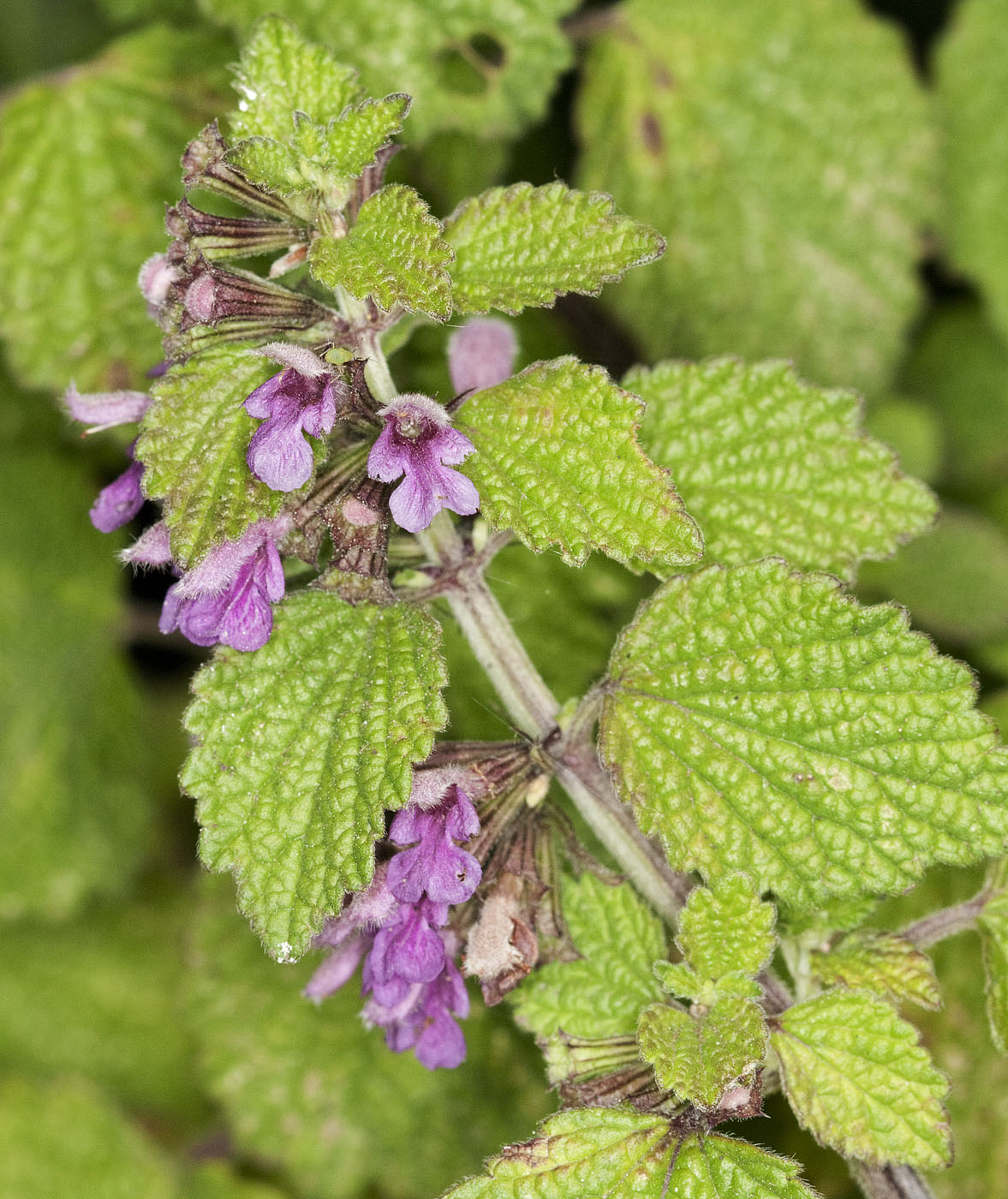
In the hedges were two similar plants of the dead-nettle group; black horehound and hedge woundwort. They both look like nettles and have smallish purple flowers. I am learning plants at a great rate, and I can now tell these two apart conclusively.
Curled dock, Rumex crispus, by Ray's Pond in Jubilee Country Park. 11 June 2011.
Curled dock, Rumex crispus, by Ray's Pond
in Jubilee Country Park. 11 June 2011.


Ray's Pond was beautiful, as usual. It's a recently created pond. All its plants have been introduced, and they are a good selection. Currently, greater and lesser spearwort, relations of the buttercup, are in flower. I was also pleased to see a magnificent curled dock by the fence, its colourful seed head full of three-angled seeds.

There were several butterflies around. The only ones I saw close enough to identify were meadow browns. We also saw a splendid Five-spot Burnet moth, most likely the Narrow-Bordered species, which stayed still long enough for a good closeup photo, in which my ring flash shows up its iridescence.

I have omitted many plants so as not to just end up with a huge list. But the morning was full of learning in a pleasant environment, which is almost heaven. And I had another walk due in the afternoon ...

All the photos in this post were taken with my Canon EOS 450D camera with the EF 100mm macro lens.

More images:
Narrow-Bordered Five-spot Burnet moth, Zygaena lonicerae.  Jubilee Country Park, 11 June 2011.
Narrow-Bordered Five-spot Burnet moth, Zygaena lonicerae.  Jubilee Country Park, 11 June 2011.

Black horehound, Ballota nigra, in a hedgerow.  Jubilee Country Park, 11 June 2011.
Black horehound, Ballota nigra, in a hedgerow.  Jubilee Country Park, 11 June 2011.

Red bartsia, Odontites vernus. Jubilee Country Park, 11 June 2011.

Selfheal, Prunella vulgaris.  Jubilee Country Park, 11 June 2011.
Selfheal, Prunella vulgaris.  Jubilee Country Park, 11 June 2011.

Saturday, 11 June 2011

Quaking Grass

Quaking grass, Briza media, in the conservation field, High Elms Country Park, 29 May 2011.
The two beetles are Malachius bipustulata, which are very common at the moment.

Friday, 10 June 2011

Orchids at High Elms

Pyramidal orchid, Anacamptis pyramidalis, in bud.  High Elms Country Park, 9 June 2011.  Orchid walk led by Terry Jones of Bromley Countryside Services.
Pyramidal orchid, Anacamptis pyramidalis, in bud.
High Elms Country Park, 9 June 2011.
After a very dry spring, Terry Jones of BCS thought that very few orchids would be seen at High Elms. He had come across only a few recently, apart from the reliable common spotted orchids, and those he had seen were small and stunted.

We were looking for English orchids. They are all small, some in spikes and some with strands of flowers; nothing like the huge exotic things you can find in florists and garden centres. So if these were stunted, we would not see much at all.

In fact I had seen some quite lush common spotted orchids only a few days ago, during a dragonfly walk with the Orpington Field Club, in part of High Elms with some tree shade that has not been as dry as elsewhere. But we would not be looking there for the scarcer species.

Rain had been forecast, so I took my Ixus 100, but not my big and vulnerable camera. It's easy to find wonderful photos of orchids elsewhere; this is just a record of what I saw on this day, Thursday 9th June. As it happened, there was no rain ...

Bee orchid, Ophrys apifera.
High Elms Country Park, 9 June 2011.
We started in Cuckoo Wood car park and walked up into the woods. Terry detoured among the trees at one point to show us some purple helleborines, not yet in flower, and some white helleborines which had finished. We went on over the hill and down to the field known as Burnt Gorse. There were some small pyramidal orchids among the common spotted, but no other types.

Along the hillside is Orchid Bank, a small fenced chalk meadow. Before we entered, we looked round a grassy area outside. It was woodland not too long ago, and even though it has been cleared, there are still some woodland plants there, like dog's mercury. But there are also true meadow plants, like milkwort, lesser stitchwort, bird's-foot trefoil, and wild strawberry. Bright green beetles, Chrysolina menthastri, were mating in the flowers of rough hawksbit that were everywhere among the grass.

Among these wild plants and in the grassy verges we began to find some more interesting orchids. First, a fly orchid, and then almost immediately a bee orchid. These have only a few flowers on each stem, and they are named after the insects they imitate and try to lure to accomplish their pollination.

Man orchid, Orchis anthropophorum.  High Elms Country Park, 9 June 2011. Orchid walk led by Terry Jones of Bromley Countryside Services.
Man orchid, Orchis anthropophorum.
High Elms Country Park, 9 June 2011.
The flowers of the bee orchid are upside down when they first open, and turn the right way up afterwards. The photo shows a newly opened flower.

Walking through and around the Orchid Bank, we saw several more orchids as well as more of those we'd seen already. Some broad-leaved helleborines, still growing; many twayblades in flower, quite inconspicuous with their pale green spikes. Then one of the group spotted a few man orchids, which caused great excitement.

The ribbons dangling from each flower of the man orchid have "arms" and "legs" which are said to resemble a human figure. In this photo you can see the legs clearly, but you have to look carefully to see some of the arms.

I was also interested to see the white, bell-shaped flowers of bladder campion. It was one of the many plants I am seeing this year which I have never seen before. I also saw a lot of black bryony, winding around the other plants like a bindweed, but with tiny yellowish flowers. It will have showy red berries later on.

We moved on through the woods and saw some bird's-nest orchids. These are oddities even among the orchids. They lack all chlorophyll and live off nutrients obtained from a host plant through a fungal partner. This kind of parasitical existence is not unique; there is some toothwort in these woods that has a similar mode of life. I saw some during the spring walk through these woods, and also in Cudham Valley earlier on.

That made ten orchid species, including some very nice specimens. So despite Terry's forebodings we did very well, and I was pleased to learn some new plants. I would not have spotted some of these if I had been alone, even if I had known where to look, because they were so unfamiliar. There are two other species in this locality, but the early purple orchid has flowered and gone, and no butterfly orchids have been found this year.

Common spotted orchid, Dactylorhiza fuchsii; a white-flowered example. Behind it to the right, a common twayblade, Neottia ovata. High Elms Country Park, 9 June 2011.  Orchid walk led by Terry Jones of Bromley Countryside Services.
Common spotted orchid, Dactylorhiza fuchsii; a white-flowered example.
Behind it to the right, a common twayblade, Neottia ovata.
High Elms Country Park, 9 June 2011.
Violet helleborine, Epipactus purpurata, not yet in flower.. High Elms Country Park, 9 June 2011.  Orchid walk led by Terry Jones of Bromley Countryside Services.
Violet helleborine, Epipactus purpurata, not yet in flower.
High Elms Country Park, 9 June 2011.
Fly orchid, Ophrys insectifera, pulled sideways by black bryony.  High Elms Country Park, 9 June 2011.  Orchid walk led by Terry Jones of Bromley Countryside Services.
Fly orchid, Ophrys insectifera, pulled sideways by black bryony.  High Elms Country Park, 9 June 2011.
Bird's-nest orchid, Neottia nidus-avis, deep in beech woodland.  High Elms Country Park, 9 June 2011.  Orchid walk led by Terry Jones of Bromley Countryside Services.
Bird's-nest orchid, Neottia nidus-avis, deep in beech woodland.
High Elms Country Park, 9 June 2011.